Gaza: A Beacon of Light in an Inhumane World
By Hedaya Shamun (*)
The world, vast as it is, lies in a place unknown to those living in Gaza—under bombardment, destruction, and ruin for nearly two years. The irony is that the world knows nothing about Gaza or its people, who have become skeletal remains after almost seven hundred continuous days of genocide, interrupted only for a few days by a truce that did not include the people of Rafah at the time. Everyone sees, watches, sympathizes, weeps; thousands in Western countries take to the streets in demonstrations or sit-ins, solidarity takes many forms—and this is not to belittle these efforts—but what is it that you do not know about Gaza now?
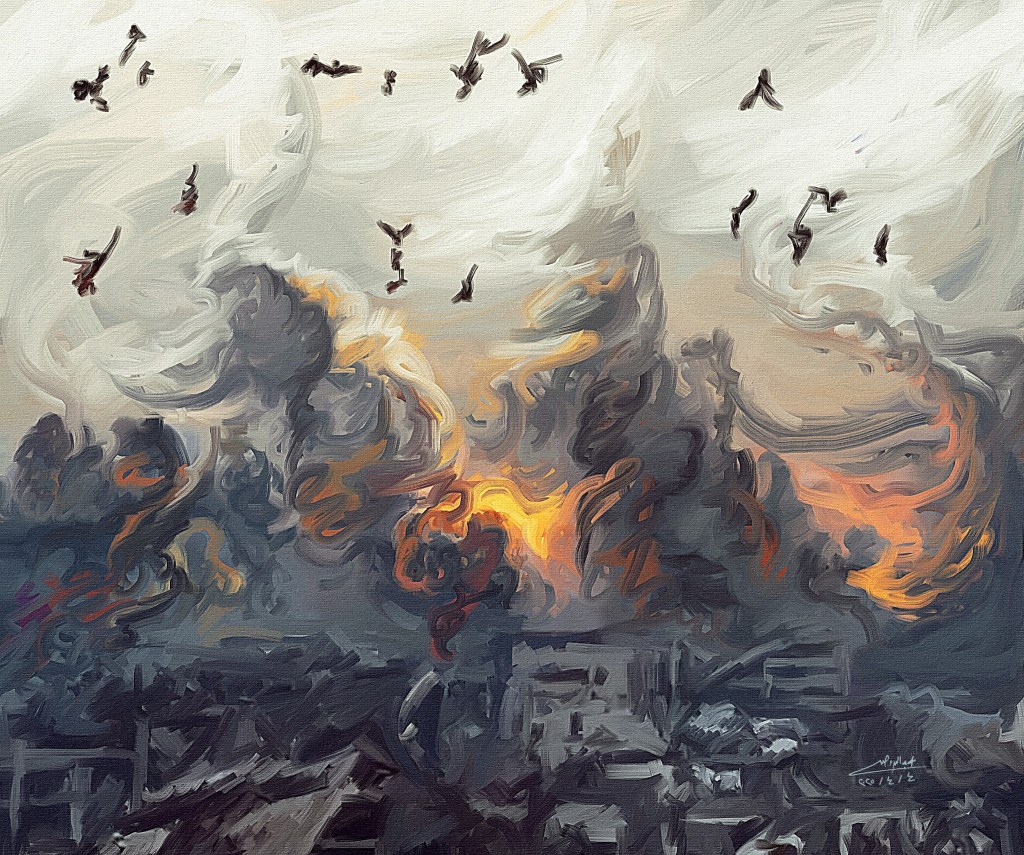
Burdens That Mountains Groan Beneath
Fear, anxiety, and dread of the looming unknown—these are burdens mountains would groan under, so how then the bewildered and anguished hearts in Gaza? To awaken in the morning is itself a wonder after a bloody night in which the earth trembled—whether a house, a tent, or a makeshift shelter. For morning to begin with daylight does not happen in Gaza; night flows into day in the same exhausted body, in eyes swollen with terror, sleeplessness, hunger, or anticipation… What comes after the sounds of explosions drawing closer? Bewilderment and a multitude of questions are tearing through the minds of every Gazan woman, youth, man, child, and elder. Do we stay? Are we forced to flee? Yes—now everyone is forced to flee. But displacement is another kind of death. Those who have experienced it describe it as a slow dying: humiliation, degradation, a plunge into the unknown.
Hundreds of questions press again: Where will we find water? Where will we find food? We have no money, no liquidity in Gaza. Where can we find land or a space when hundreds of thousands are crammed mercilessly into the south? A hell embodied in the tents of the displaced. How shall we move? What do we take with us? What do we leave behind? And how do we find transport in the absence of diesel and petrol, with thousands of vehicles halted? Now, animals pulling carts are the only hope of movement—yet even they have become scarce and prohibitively expensive.
The questions never stop. They are daily, even momentary, repeating endlessly, yet with no decisive answers. They are maddening questions in an inhuman condition—explosive questions hurled back into the faces of those who ask them. But this has been the life of Gazans for two years: life suspended in a labyrinth full of thorns and explosives. Suppose one is not killed by rockets, bombs, those cursed quadcopter drones, scattered shrapnel, or targeted and random bullets. In that case, one will be killed in the search for a place to survive, by contaminated water, or by piles of garbage that have become a breeding ground for diseases and epidemics. And if a Gazan survives all that, he will not escape starvation. There is no healthy or balanced food in Gaza. No fruits, no vegetables, no nutritional supplements, no meat—only canned goods with preservatives that deepen poverty, upset stomachs, and make people victims of malnutrition.
The adults relinquish their only daily portion for their children—but it is a painful sacrifice. Sometimes it is just a meal of lentils, half-cooked on firewood bought at exorbitant prices, filling the air with black smoke inhaled by women, men, and children for long hours, in hellish time and scorching summer heat. It is Gaza’s own inferno—one the world cannot feel, in that luminous dot. No time to notice how faces have changed, no mirrors in Gaza—mercifully so, lest its inhabitants see themselves. They will not recognize them, just as we no longer recognize the faces of our loved ones, our siblings, our friends.
Gaza Is Hell Now…!
Bodies’ fever with heat, rashes, itching—followed by infections and sores. No clean water, no medicine, the blazing sun shielding no one. No detergents, no disinfectants, not even the simplest of necessities in the hands of thousands of women, girls, and families. Children who do not know the taste of meat or chicken—some know only their starving mother’s milk. They cry day and night. Fathers flee into death traps in search of a handful of flour to bake a loaf of bread for their children. Dozens of martyrs fall every day. Entire housing blocks are blown up—hundreds of homes destroyed daily. They want Gaza without homes, only sand and tents.
Life in Gaza is hardship upon hardship, every minute death, every minute hunger, disease, and exhaustion. When they described hell, they said it was placing people together in a narrow, suffocating place—this is Gaza now. And on top of it all, they have nothing. Crossings are closed by the Israeli occupation. The sea itself—can it be closed to life in Gaza? Yes. Warships kill, abduct fishermen, and destroy what boats remain. Even fish are denied them, though they are the people of the sea—this, too, by the genocide consuming every aspect of life in Gaza.
The night of Gaza is as black as its day. Explosions unceasing, Israeli threats relentless, day and night—forcing people into displacement. Families are bewildered by life just as by death. Who can live a single day in Gaza from outside it without losing their mind—or cursing every treaty and law that failed to protect a child, a woman, or a man? Tens of thousands covered only by a piece of cloth that shields them neither from eyes nor from planes. Thousands of homes turned into graves for their owners—like the journalist Marwa Muslim, whose body and those of her siblings were pulled out as bones and skulls after some forty-five days, abandoned to their fate as occupation forces barred civil defense teams from rescuing them. They lived and died together.
Thousands of stories remain untold—of torture, abandonment, of stray dogs tearing into bodies, with Israeli forces openly forbidding rescue. Cemeteries scattered across the city, daily funerals, daily loss. Thousands of women are widowed, thousands of mothers killed, many of them cancer patients, chronically ill, with no medicine or treatment. This is Gaza: once overflowing with love and life, now the city of death, the city of orphans. Still, it embraces the survivors—but are survivors still survivors now?
We fear for our loved ones, our families, our friends; we fear for the wounded and slain homes; we fear for the cats, dogs, and birds fleeing from a war of extermination that has spared no heartbeat. We fear for an unknown future shrouding the sorrowful city, and for its sorrowful sea—we no longer hear the roar of its shores, nor do we cast our grief into its depths, for it has filled to the brim with a terrifying silence.
We fear for our devastated present and our bleeding past, laden with memories of wars and aggressions. Yet despite that, we ran and did the impossible to remain upon its soil—the soil of Gaza that has drunk the blood of its sons and daughters still does. Gaza, from which flowers and olive trees have vanished, and with them the very signs of life we knew as its children. Gaza, a patch of light in a dark, savage, inhuman world—a world that has oppressed us all and continues to pick at our wounds, until we wake from our death only to sip a nectar that resembles life, then fall, then rise again.
The mother rises for the sake of her children, the father for the sake of his loved ones, the birds for their young, and the orphans for one another. Who do we have but ourselves, O beloved Gaza? Who do we have but ourselves, if we do not clasp our hands together to stand despite the wounds?
We deserve life, and we do not deserve all this brutal killing. You deserve love, dignity, and life—for God is its Giver, and God does not accept all this killing and the spilling of innocent blood…!
To the Beautiful Women of Gaza!
A deep breath, a strong exhale, muffled sobs, and laughter that escapes despite the massacre—because we love life. We gathered, the family of the Community Development and Media Center, in a long, informal meeting, for death has left us no space to live as life is ordinarily lived. Death snatches our efforts and wrestles us for the cocoon of life. Yet here I say to the team, pulsing with strength and generosity despite the carnage: it is the beautiful women of Gaza who inspire us in their striving to survive, to live.
Life has worn down their faces, but they work with all the strength they have for the sake of an entire generation of young women and men, so they do not fall into the pit of depression, defeat, and collapse. They slip lightly among the tents to create hope for the youth; a training in a tent, or at the center, despite its wounds, revives hope and life. They defy fear and pain, carrying in their hearts thousands of questions and thousands of sorrows, some spoken, some forever unspoken. They have lost their homes and their loved ones, yet they still hope Gaza will survive. And we still fuel life and hope so that Gaza may survive, so that they may survive, despite the slaughter that has spared no house, no courtyard, no rich, no poor, no child, no young woman—it has touched them all. The war has crushed us all.
One of us carries thousands of questions, bewildered: do we flee once more, and again, and again? Do we stay and die in what remains of our homes? Will we truly survive this massacre, or is it only a matter of time for everyone in Gaza? Another carries her tent in her heart and flees, knowing that displacement is an unmerciful, unknown death, as if you are led to die in another place. Yet extermination shows no mercy, the strikes grow ever more brutal, shaking the heart before the body, while the cries of the innocent embrace the black sky heavy with warplanes that never leave it.
One of us still clings to hope, seeing with too much clarity, deciding to stay no matter how close death comes. But this is extermination, crushing, gratuitous death. Why are we forced to choose the shape of death in Gaza? It is not a choice, but a cruel paradox—just a matter of seconds, and the great question: when will our killing come, and in what form? Alone, or in groups? In one piece, or scattered in fragments? Why do these questions stick in our throats—we speak some, but cannot bring others to our lips? Why must we witness the deaths of our loved ones? And why us?
It is not that fear, nor that anxiety, nor that terror you hear about from this corner of the world. It is Gaza’s besieged sky, which, through the massacre, casts these explosive questions, reopening wounds again, without anesthetic, without relief. It is as if a dagger were dragged across a bare body in broad daylight, when the glaring sun allows no illusions and no doubling of belief. Do you truly see Gaza’s wounds? Do you truly see our blood? We are not a video game. We are not a film about hunger and killing. They live it with every breath—even oxygen itself tightens around them until they suffocate. But they do not weep—there is no time for the luxury of weeping. We are the ones who weep.
If only tears could bring children back to life, back to laughter, back to hope. Gaza—this tiny strip—glows with its fresh blood, illuminating the inhumanity of the world. After what happens in Gaza, there is no humanity left.
And yet, amid all the death, the killing, the ruin, we still see the beautiful faces of our loved ones, and their even more beautiful souls—souls that deserve our struggle, for humanity and humankind above all. Gaza is what we love—it is the lone spark of light in a darkened world. We will raise the voices of the survivors high; we will remain stronger and more hopeful—for them, for the women, for the generations to come—young men and women who deserve a life of dignity and freedom.
To the beautiful women and their families in Gaza—we cherish you, we love you, we draw our strength from your words: Hanan, Noura, Fadwa, Nisreen, Warda, Eman, Khawla, Yasmeen, Haya, Hind, Sondos, Ahlam. And to the wonderful men: the Mohammads, Naser, and Sami.
____________________
(*) Writer and journalist, Chairwoman of the Community Media and Development Center in Gaza
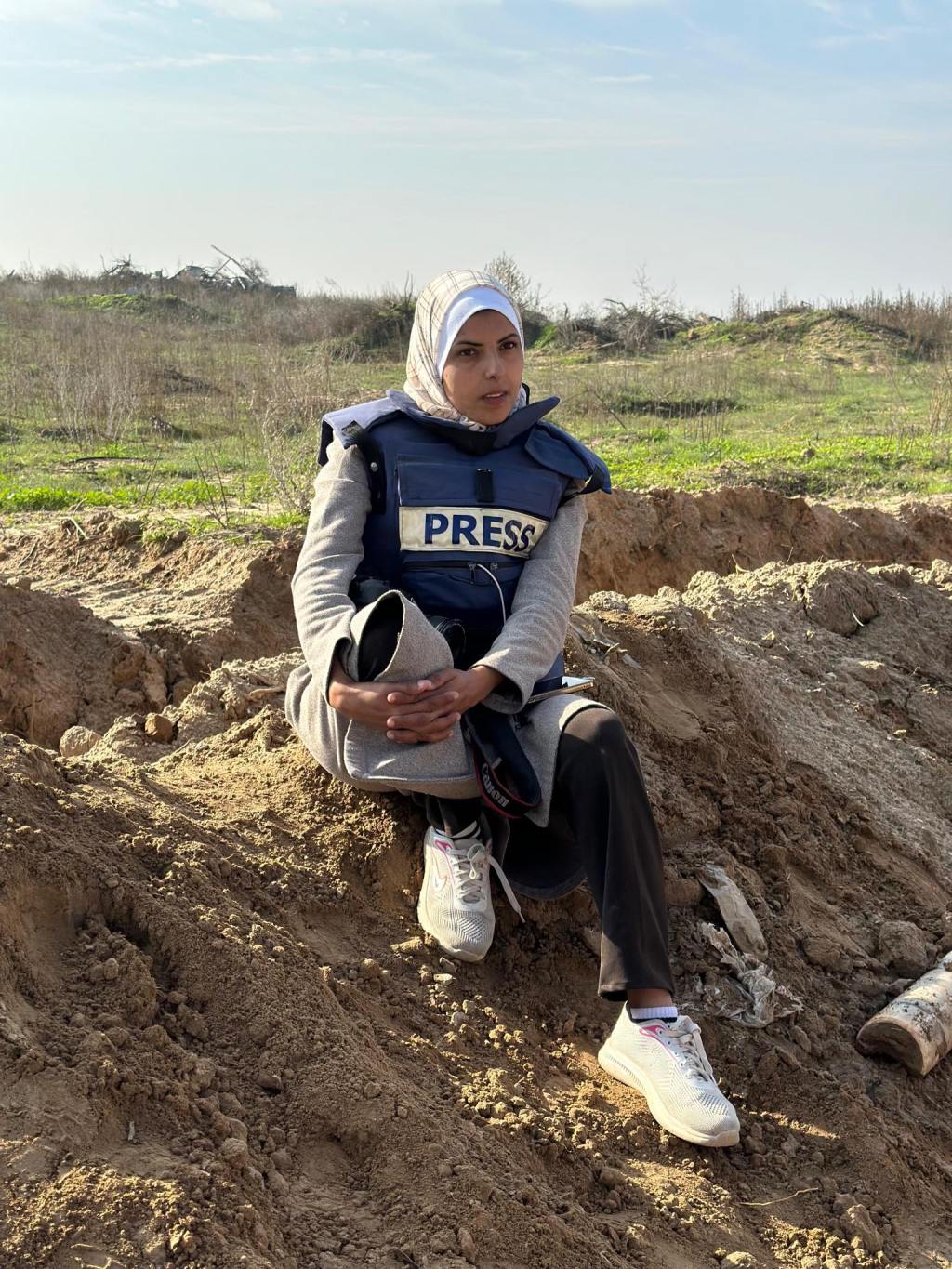


 Hedaya Shamoun
Leave a comment